Skip to content
Scan·Serve·Settle
012345678901234567890123456789012345678901234567890123456789012345678901234567890123456789
Product

One system, from the table to the till.

Everything runs on the same live information — the guest's order, the waiter's phone, the kitchen ticket and your numbers. One system, not seven things wired together.

Order types

Three ways an order arrives. One place it lands.

  • Dine-inTable QR, waiter phone, kitchen screen, pay at the table. The whole loop.
  • TakeawayCounter and pickup orders on the same kitchen screen. Same bill. Same GST.
  • DeliveryA proper order type on the same pass — not a screenshot from someone else's app.
01Guest QR

Your guest's phone is the menu.

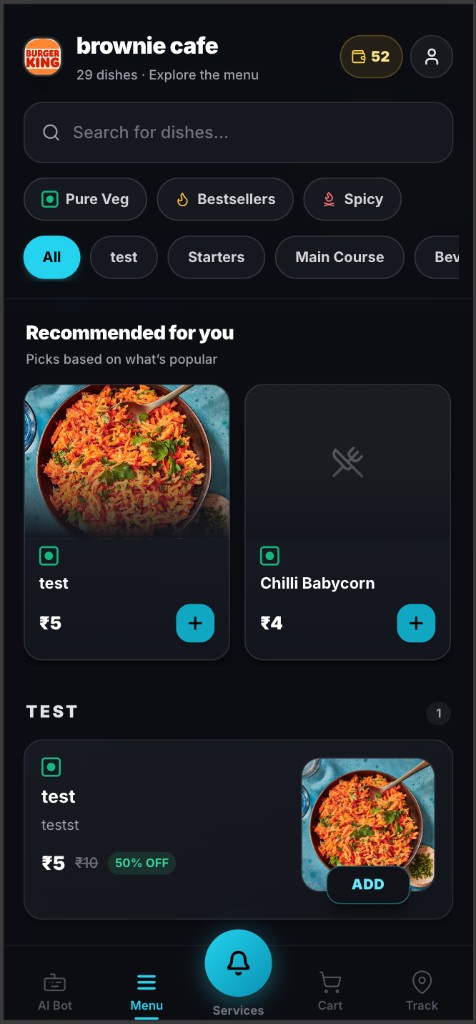
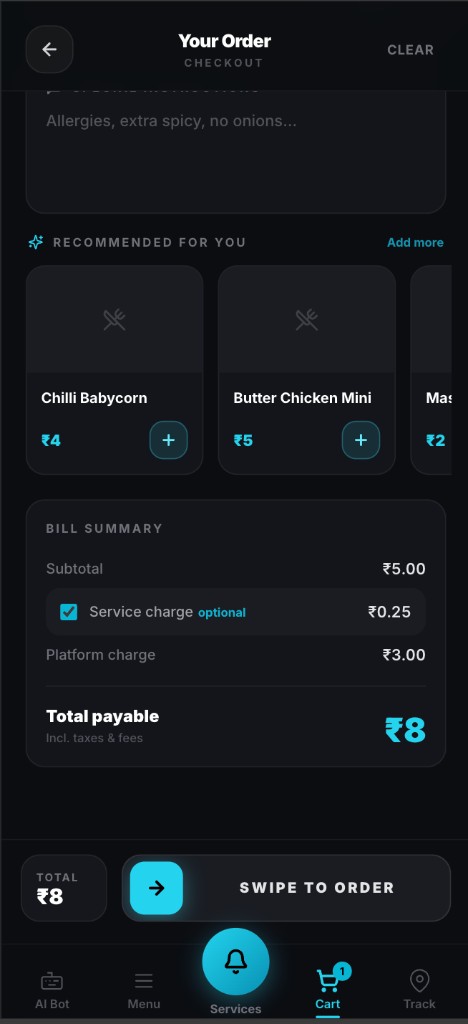
Every table gets a QR code. Your guest scans it, sees the menu, orders and pays — all on their own phone. Nothing to download. No waiting to catch someone's eye.

The table takes the order. Your staff stop being messengers.

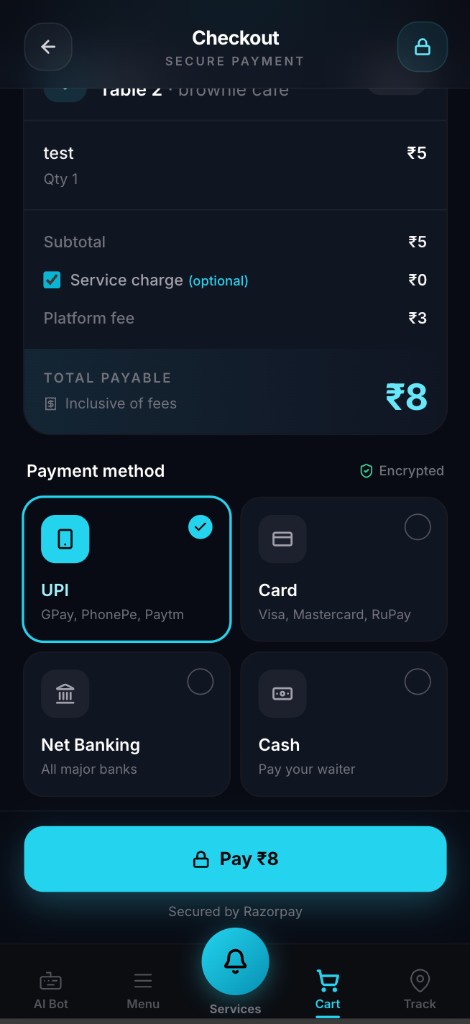
They pick sizes and add-ons, ask SpiceBot what to eat, pay with UPI, card or cash, then watch the order move. Same session: call for water, the bill, a waiter. When the meal is done they leave a review and earn points — still on that phone.

  1. Scan
  2. Menu
  3. Ask AI
  4. Order
  5. Pay
  6. Track
  7. Review
  8. Points
  • QR ordering at every table
  • Opens in the browser — no app
  • Sizes and add-ons
  • SpiceBot menu chat
  • UPI, card and cash
  • Live order tracking
  • Call for waiter, water, bill
  • Reviews attached to the order
  • Loyalty points
Guest menu
Guest checkout
UPI, card, cash
Guest menu
02Waiter panel

Your waiter's phone is the floor.

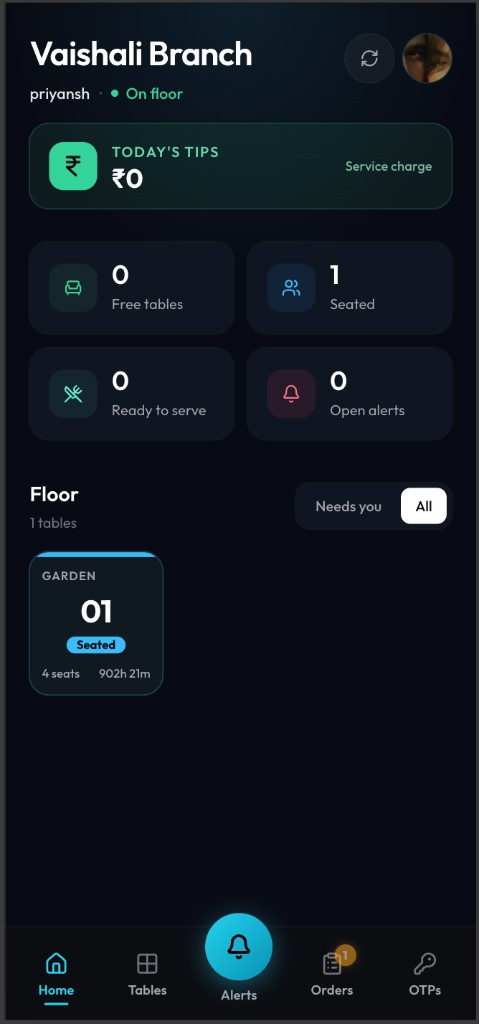
Waiters, cashiers, hosts and captains each get a phone for their job. Tables, guest calls, ready dishes and OTPs — live. Nobody queues at the one machine by the till.

WhatsApp is not a waiter system. This is.

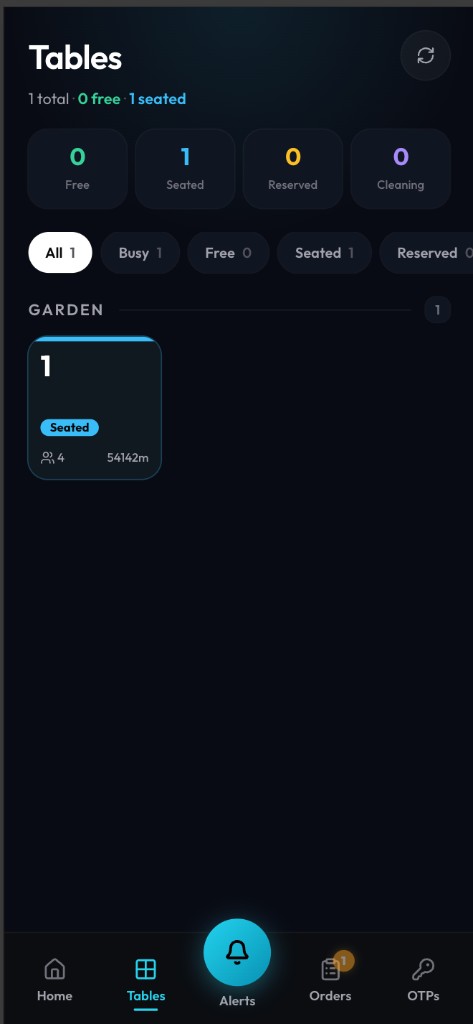
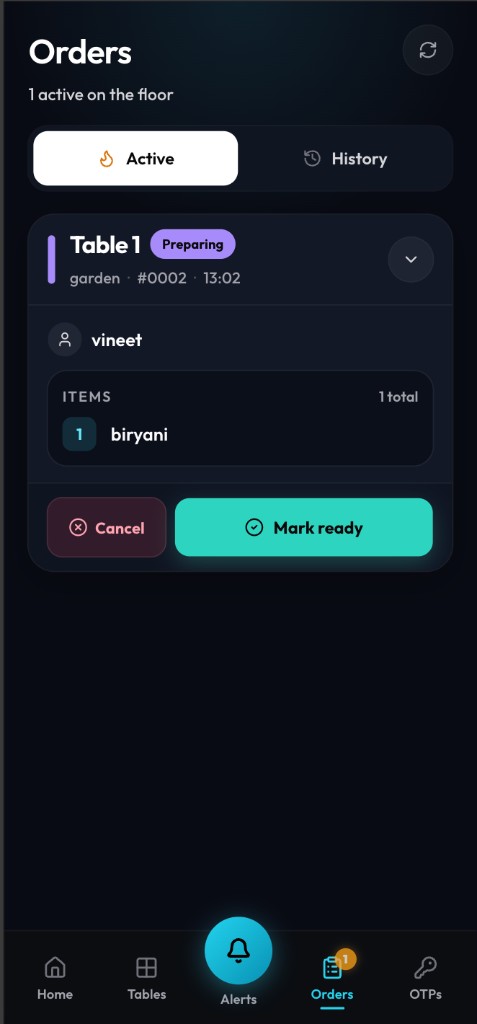
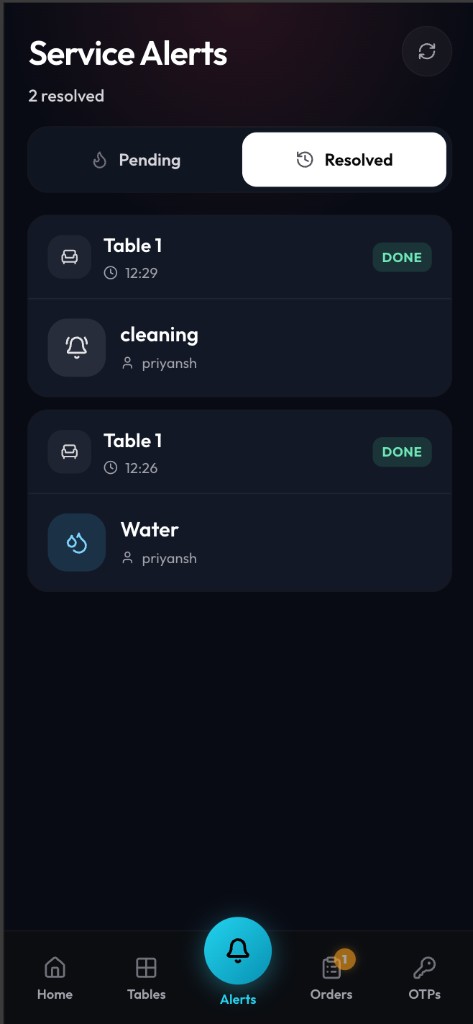
Home shows what needs a person. The table map is grouped by room: free, seated, reserved, cleaning. Alerts are the guest tapping Call waiter, Water, Tissue, Clean table or Bill. Orders go confirm → cooking → ready → served → paid. Cash or online. A one-hour OTP if the guest needs to sign in at that table.

  1. Home
  2. Tables
  3. Alerts
  4. Serve
  5. Collect
  6. OTP
  • Live table map on a phone
  • Seat, free, or mark for cleaning
  • Guest calls as they happen
  • Ready-to-serve from home
  • Cash or UPI at the table
  • Guest OTP for the table
  • A screen per role
  • Updates as the kitchen cooks
Waiter · home
Waiter · tables
Waiter · orders
Waiter · alerts
Waiter · home
03Kitchen

The order reaches the kitchen. Nobody types it twice.

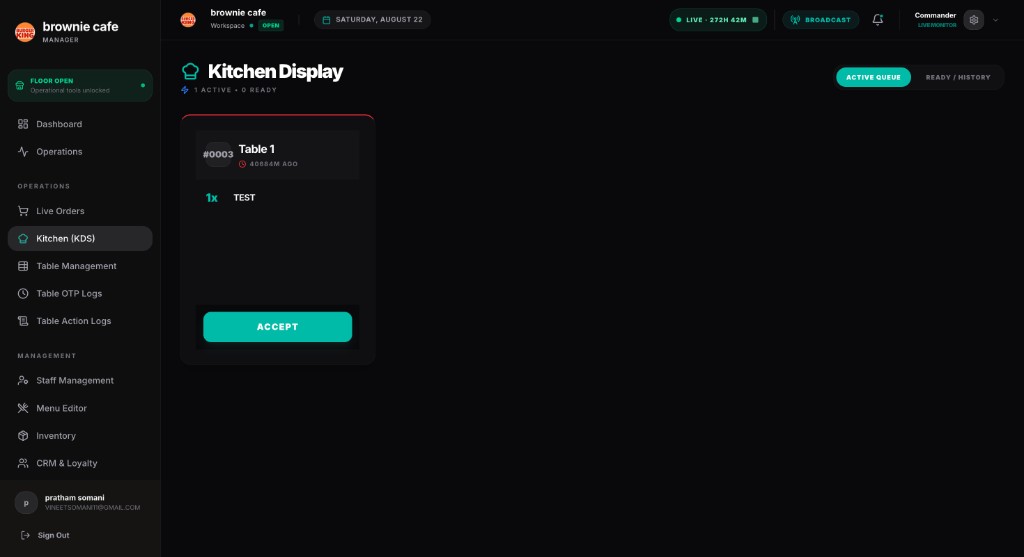
What your guest tapped is what your chef sees — on a screen, updating live. No shouting across the pass. No paper slip that goes missing.

The ticket is the order. Not a copy of the order.

Dine-in, takeaway and delivery land on the same display. Tickets move confirmed → cooking → ready → served. You can rush a ticket, recall one, and see how loaded the pass is so SpiceBot can estimate wait times.

  1. Confirmed
  2. Cooking
  3. Ready
  4. Served
  • Kitchen display screen
  • Orders arrive live
  • Dine-in, takeaway and delivery
  • Rush and recall
  • Cooking-time estimates
  • See how busy the kitchen is
Kitchen display
Kitchen display
04SpiceBot

SpiceBot tells you how last night went — before you ask.

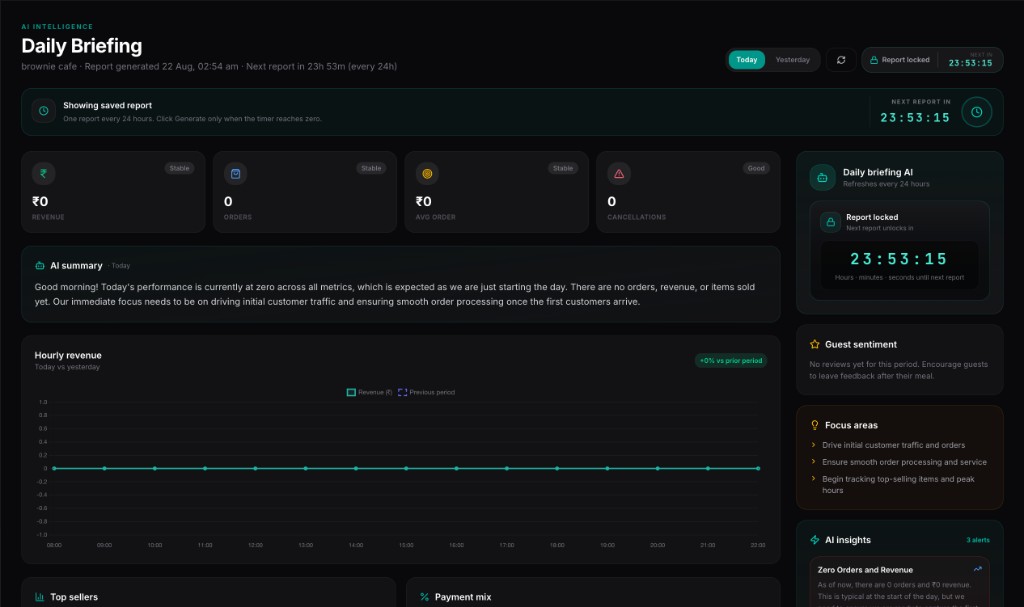
It reads the same live restaurant your floor and kitchen are running. Then it answers where you actually need it: in your guest's menu, on the kitchen screen, and in your morning.

AI that sits in the shift — not a chatbot on a marketing page.

Guests ask in their own words. The menu answers from the real dishes. You get a daily briefing, written reports, review meaning, menus in other languages, what to push and what to drop, combos, and how long the kitchen will take.

  1. Guest
  2. Menu
  3. Kitchen
  4. Reviews
  5. Reports
  6. You
  • Morning briefing
  • Ask it anything about the restaurant
  • Written reports
  • What to push, what to drop
  • Menu descriptions written for you
  • Cooking-time estimates
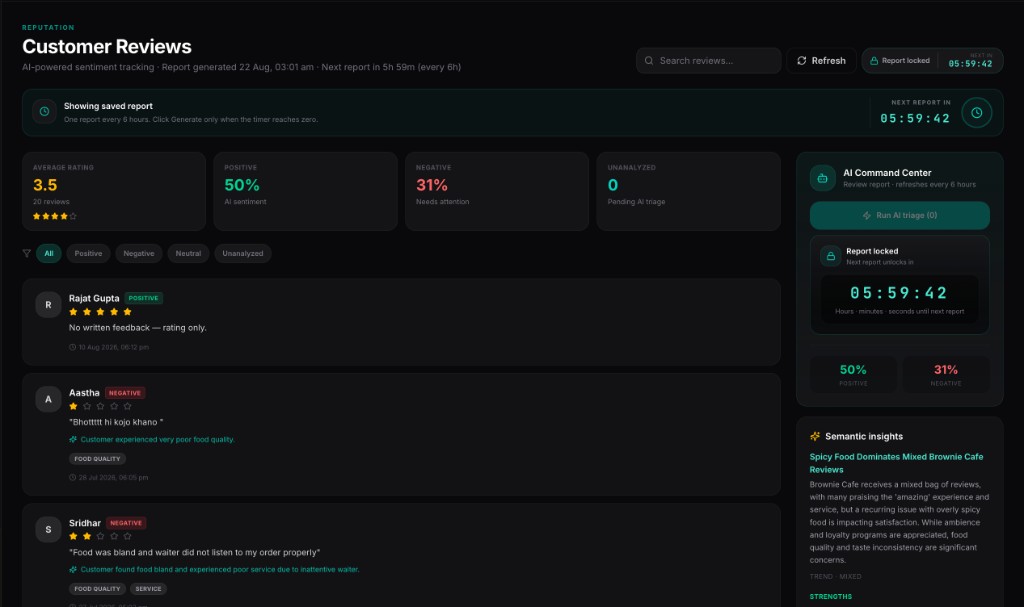
  • What your reviews really say
  • Menus in other languages
  • Dish suggestions
  • Kitchen load
  • Upsells and combos
SpiceBot daily briefing
Customer reviews
SpiceBot daily briefing
05Money

UPI, card, cash. GST on every line.

Three ways to pay, one bill, tax worked out as you go — and a payout that already knows what's yours. Built for how Indian restaurants actually take money.

The bill, the tax and the payout are one movement.

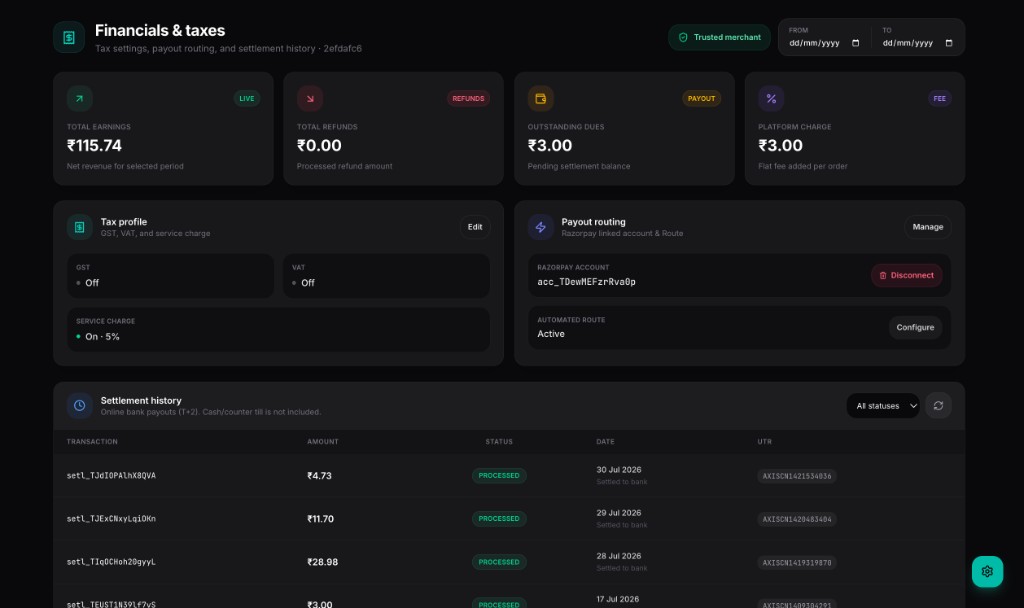
Razorpay splits the guest's payment: your share to your linked account, the platform fee aside. Cash orders still count — those fees come off later digital payouts. CGST and SGST sit on each line. Optional service charge. Aadhaar and PAN at signup. Stripe if a foreign card shows up.

  1. Collect
  2. Add GST
  3. Split
  4. Settle
  5. Payout
  • Razorpay
  • Stripe for overseas cards
  • Split payouts via Razorpay Route
  • UPI, card and cash
  • GST on every line
  • Your share, split automatically
  • Settlement history
  • Cash fees netted off later
Financials and GST
Financials and GST
06Manager panel

Know how the day went, without asking anyone.

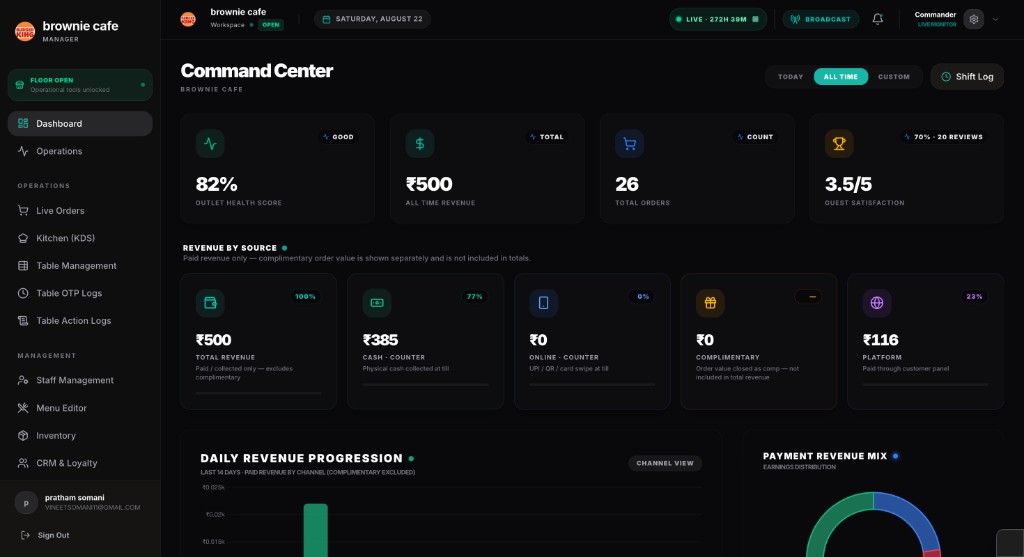
Sales, orders, average bill, busy hours, what sold, who worked, what's running out, what guests said. One screen, updated as it happens. You open the day. You close it.

The morning briefing is sitting there before you unlock the door.

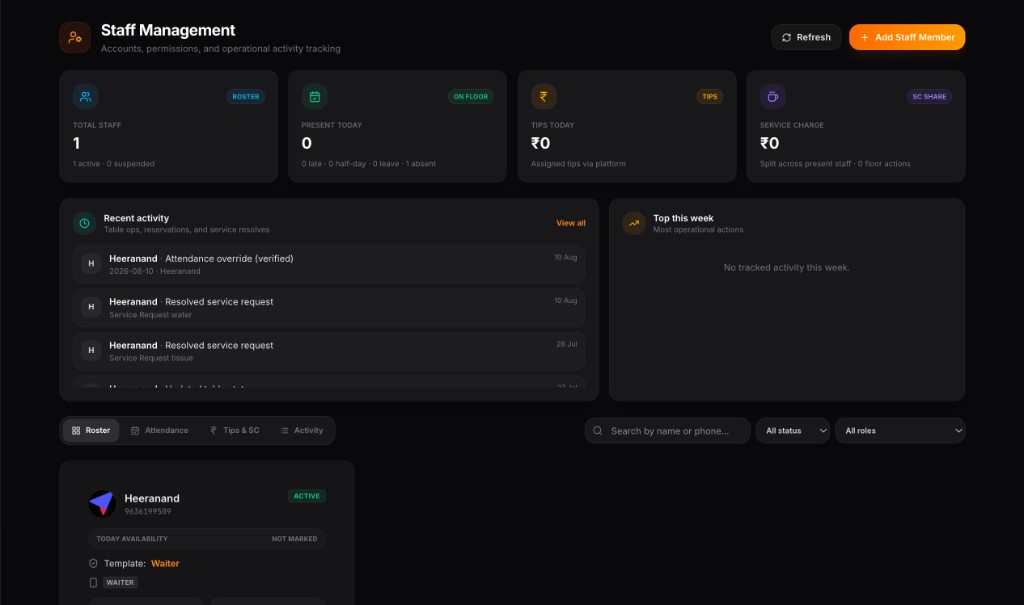
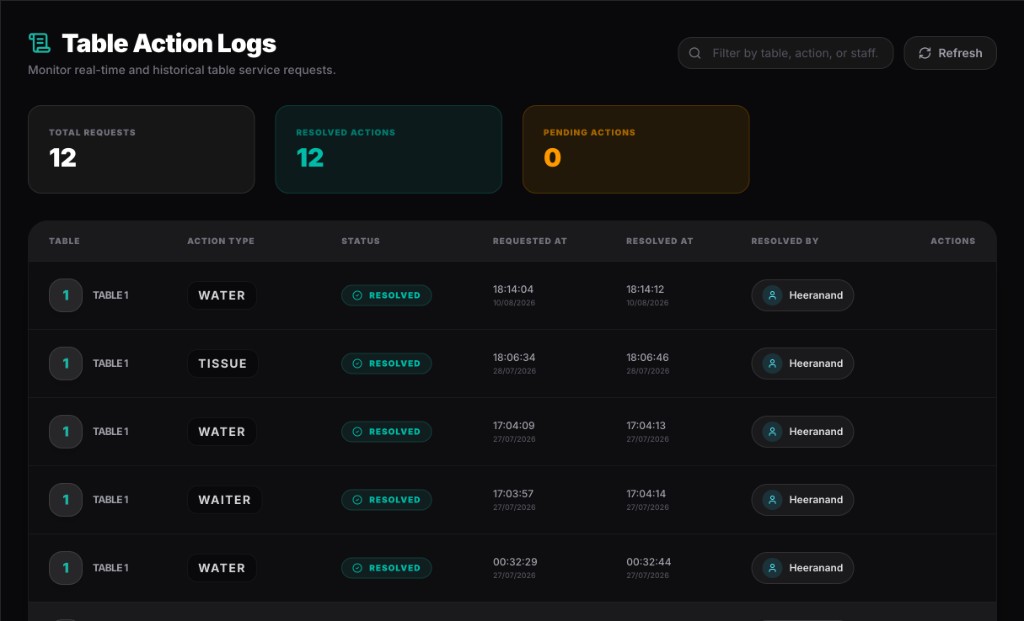
Staff roster with real roles. Attendance and tips on the open session. Menu editor. Live orders. Table-action logs — who asked for water, who resolved it. Surplus listed as a donation. Analytics and an AI report. Support tickets from the same desk. Stock that moves when a dish sells. CRM and loyalty. Reviews with SpiceBot's read. This is one outlet's whole job.

  1. Open
  2. Orders
  3. Staff
  4. Menu
  5. Rescue
  6. Close
  • Command centre — sales and health
  • Open and close the day
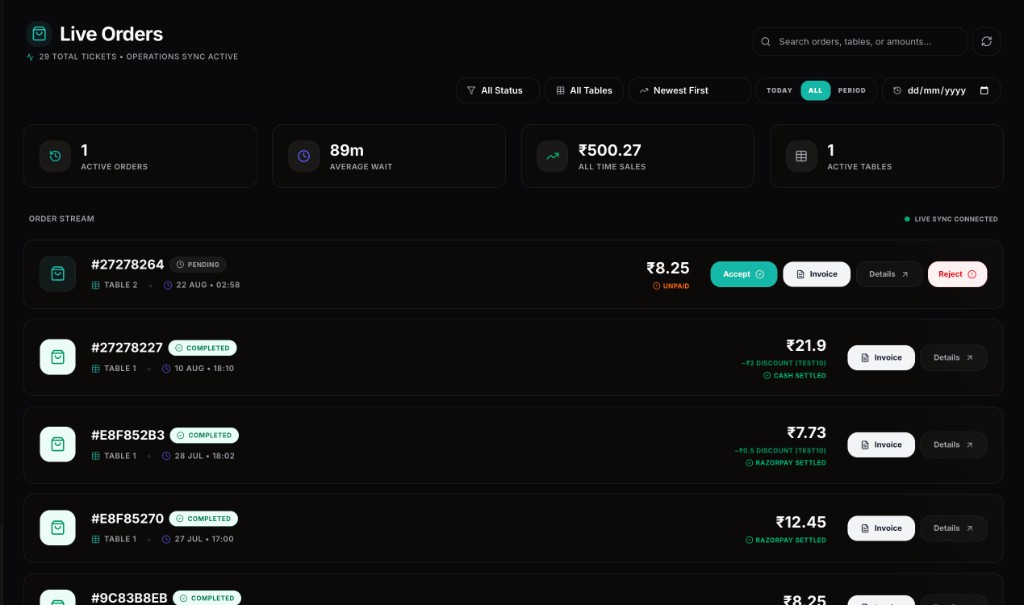
  • Live order stream — accept, reject, invoice
  • Staff, attendance, tips, activity
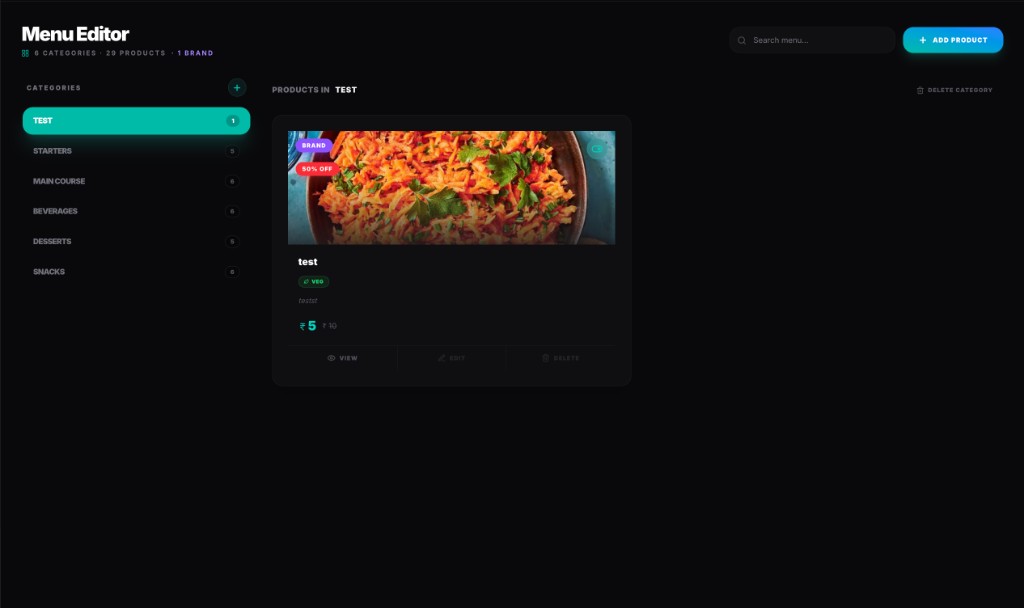
  • Menu editor — dishes, sizes, offers
  • Table actions — who asked, who handled it
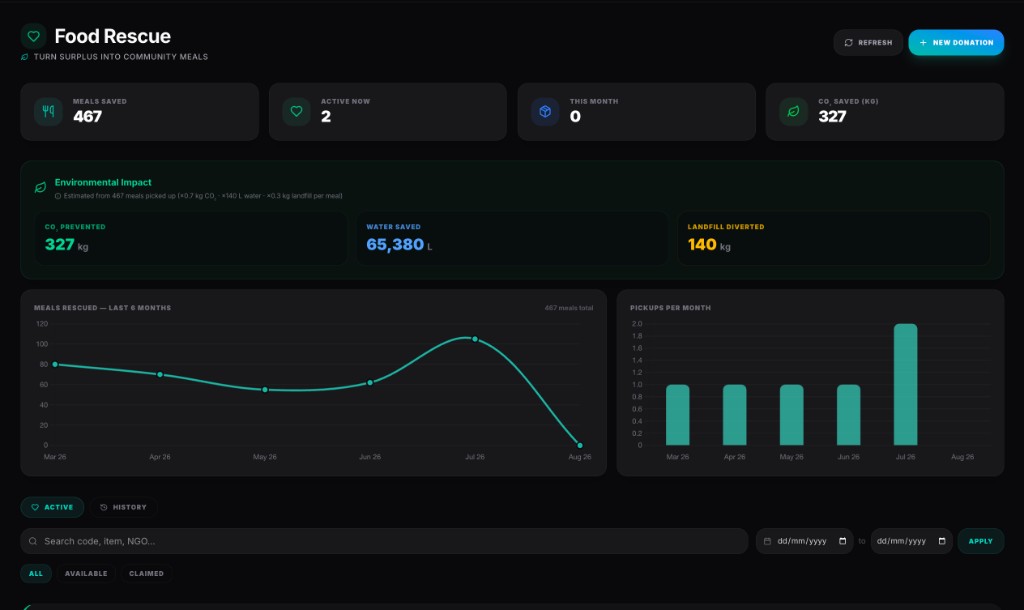
  • Food rescue — surplus as a donation
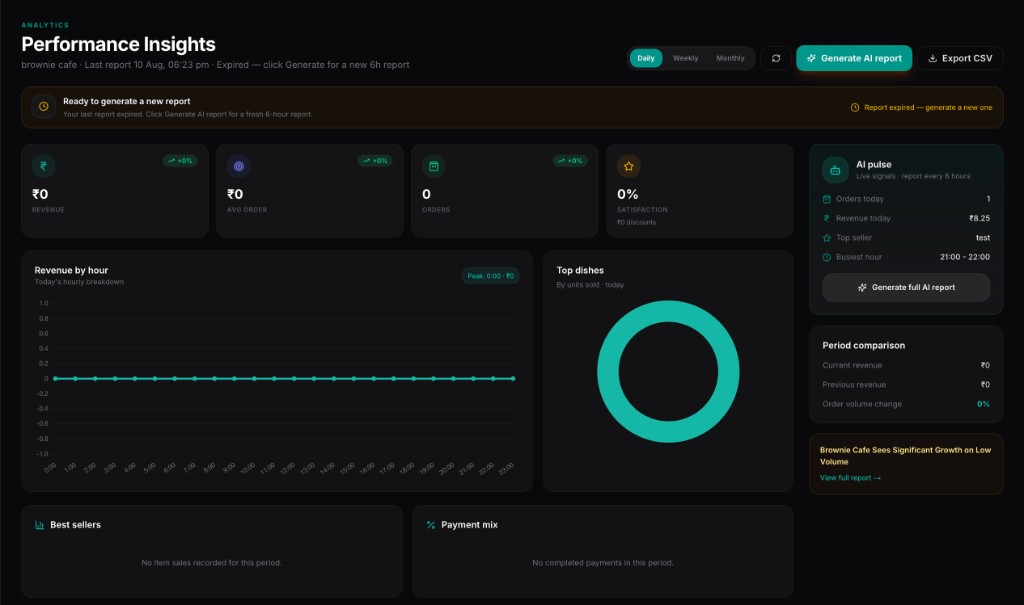
  • Performance insights and AI reports
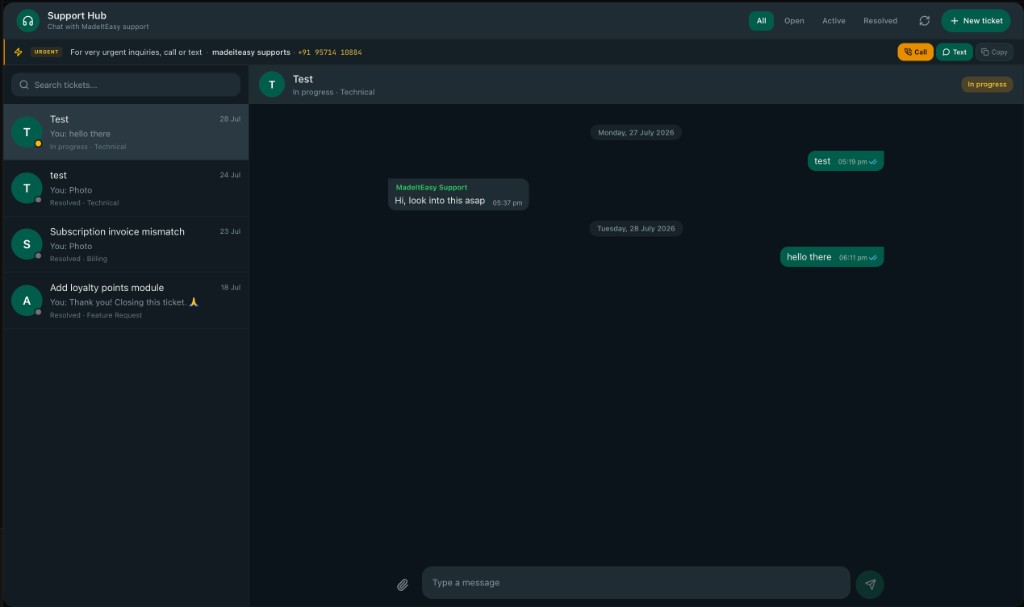
  • Support hub — tickets and a call
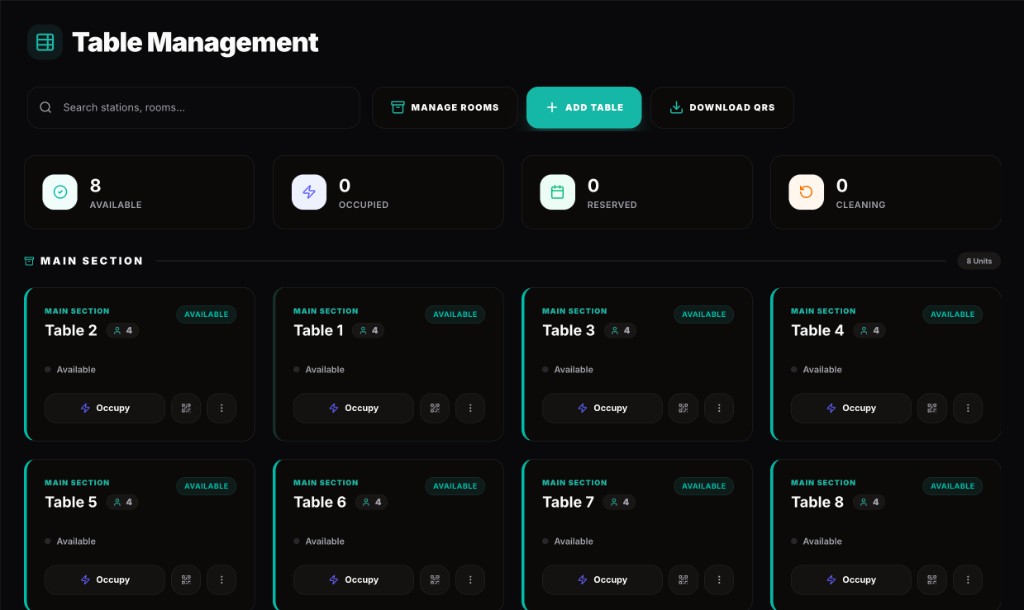
  • Tables, QR codes, OTP logs
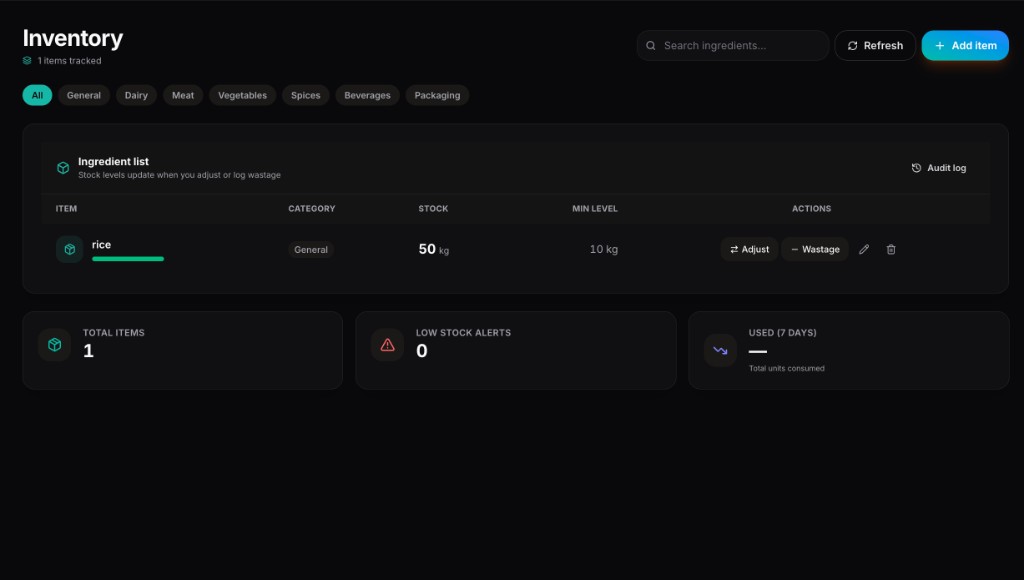
  • Stock and wastage
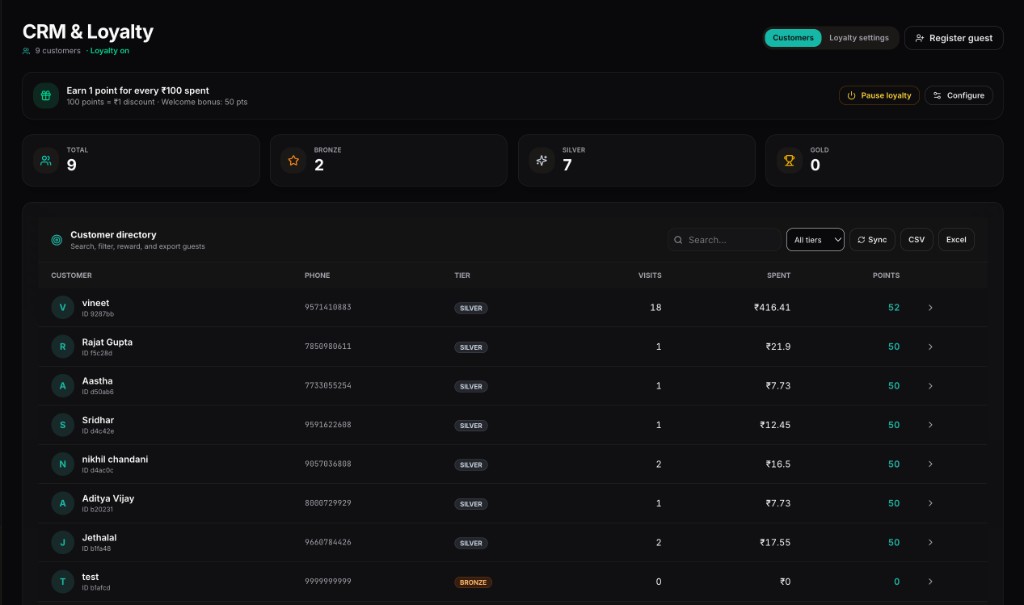
  • Guests and loyalty
Manager command center
Live orders
Staff management
Menu editor
Table action logs
Performance insights
Food rescue
Support hub
Table management
Inventory
CRM and loyalty
Financials and GST
Manager command center
07Franchise HQ

One brand. Every outlet. One system.

The system your first restaurant started on is the one your twentieth runs on. Menus, guests and numbers roll up on their own — you don't set it all up again.

Head office sits above the outlets. Not in a second product.

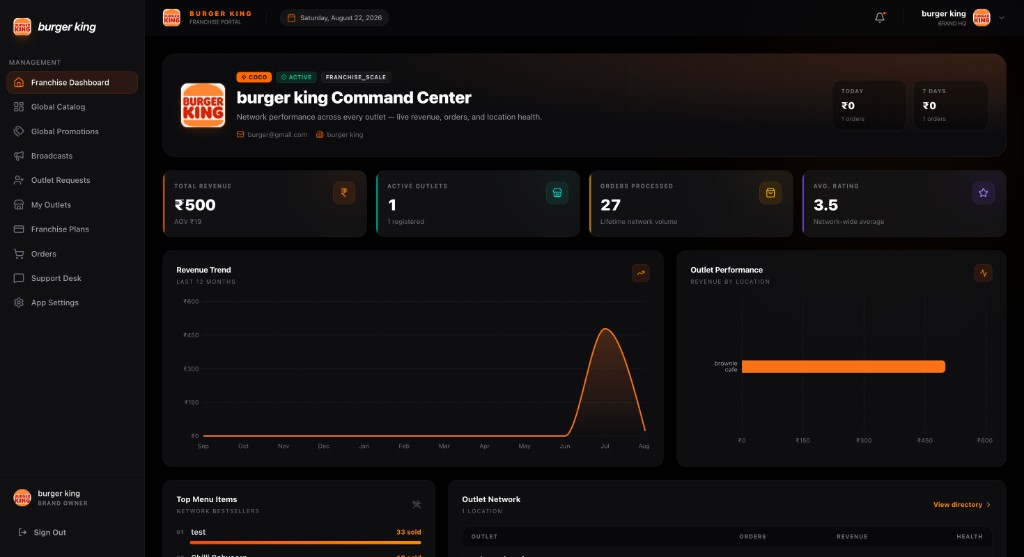
Global catalogue. Global promotions. Broadcasts. Approve a new site. Compare health outlet against outlet. HQ pays the bill, or each site pays. Loyalty follows the guest across the brand. Support from outlets lands on one desk.

  1. Head office
  2. Outlet A
  3. Outlet B
  4. Outlet C
  5. Outlet D
  • One menu, pushed everywhere
  • One guest list for the brand
  • Compare outlet against outlet
  • Approve new outlets
  • Broadcasts to every floor
  • Loyalty across all outlets
  • HQ pays, or each outlet pays
  • Orders across the network
  • Brand support desk
Franchise HQ
Franchise HQ
Three products. One restaurant.

A waiter on the floor. A manager at the desk. A brand above both.

Most POS tools give everyone the same screen. Eatomatic does not. The waiter gets a phone. The manager gets the day. Head office gets the network. Same live orders underneath.

01Waiter panel

Your waiter's phone is the floor.

Waiters, cashiers, hosts and captains each get a phone app for their job — not one till at the counter that everyone queues for.

The guest already ordered on their phone. Staff should not have to re-type it.

Home shows what needs you now: a table asking for water, a dish that's ready to serve, a table that needs cleaning. You don't hunt through a list. The urgent things come to you.

Tables sit on a live map, grouped by room. Available, occupied, reserved, cleaning — tap one to seat a guest or free it when they leave.

When a guest taps Call waiter, Water, Tissue, Clean table or Bill on their phone, it lands as an alert on yours. Resolve it when you've done it. Nobody shouts across the room.

Orders move on the same screen: confirm, cooking, ready, served, done. Cash or UPI at the table or the counter — the bill is already made.

If a guest needs to log in at the table, you read them a one-hour OTP. No shared password. No paper pad.

  1. Home
  2. Tables
  3. Alerts
  4. Orders
  5. OTPs
Waiter · home
Waiter · tables
Waiter · orders
Waiter · alerts
Waiter · home
  • WaiterTables, serve, and the calls that come from the QR.
  • CashierSee the bill. Take cash or online. Close the order.
  • HostThe door and the floor map — who sits where.
  • CaptainThe waiter tools, plus a view of the whole team.
  • Runs on the phone they already carry.
  • Each role sees only their job.
  • Guest calls arrive live. No WhatsApp group.
  • The kitchen ticket and the waiter screen are the same order.
02Manager panel

One screen for the whole day — open to close.

This is the command centre for one restaurant. You start the day, watch the floor, fix the menu, pay staff, and read what last night actually did.

You should not have to ring the captain to find out how the night went.

Open operations and the floor unlocks — QR, kitchen, waiter app. Close it and guests cannot order. The day is a real session, not a guess.

The dashboard is the live room: sales, orders, average bill, how people paid, outlet health. SpiceBot's briefing sits on the same morning screen.

Live orders, kitchen display, table map and printable QR codes are one click apart. You can accept a ticket, reprint a QR, or take a complimentary bill without leaving the desk.

Staff is a roster with real jobs: waiter, cashier, host, captain, kitchen. Attendance, tips and a log of who did what — including which waiter resolved a table request — tied to the same open day.

Menu editor, stock, food rescue, guests, reviews, GST and Razorpay payouts live here too. Surplus can be listed as a donation. Analytics and an AI report sit on the same morning screen. Support is a ticket from the panel, not a WhatsApp to a vendor.

Manager command center
Live orders
Staff management
Menu editor
Table action logs
Performance insights
Food rescue
Support hub
Table management
Inventory
CRM and loyalty
Financials and GST
Manager command center
  • Command centreSales, orders, health, how people paid — live.
  • OperationsOpen the day. Close the day. Attendance sits on that session.
  • Live ordersEvery ticket. Accept, reject, invoice. Cash, online, or complimentary.
  • Kitchen (KDS)The same tickets the chef sees, from your desk.
  • Tables & QRRooms, capacity, status, bulk QR download, table transfer.
  • Table actionsWater, tissue, waiter — who asked, who resolved it, how long.
  • StaffRoster, attendance, tips, activity. Roles, not one login.
  • Menu editorDishes, sizes, add-ons, photos, veg tags, item offers.
  • Food rescueList surplus. Track pickups. Not a bin run at close.
  • AnalyticsRevenue, peak hours, top dishes. SpiceBot writes the report.
  • StockIngredients, recipes, wastage, low-stock alerts.
  • CRM & loyaltyWho came back, what they spent, what they earned.
  • MoneyGST, service charge, Razorpay account, settlements.
  • Reviews & reportsWhat guests said. What SpiceBot thinks it means.
  • SupportTickets to us from the panel. Call when it cannot wait.
  • Open and close is a product, not a habit.
  • QR, kitchen, money and staff share one clock.
  • SpiceBot briefs you before the first guest sits.
  • GST and UPI are settings, not a plugin.
03Franchise HQ

Every outlet on the same system. Head office on top.

The outlet still runs Eatomatic. Head office sees all of them — one menu, one set of numbers, one place to say yes to a new site.

Outlet two should not mean a second software stack.

The command centre rolls up the network: revenue, orders, outlet health, what sold. You compare site against site on the same yardstick.

The global catalogue is the brand menu. Change a dish once. Outlets get it. Promotions work the same way — one code, every site or the ones you pick.

A new outlet requests to join. You approve or send it back. Broadcasts go to every floor or just one. Support tickets from outlets land on one desk.

Billing can be HQ-pays (one bill for the brand) or each outlet pays its own. Starter, Growth or Scale — ten sites, twenty-five, or no cap.

Guests belong to the brand. Points earned in one outlet work in the others. You do not rebuild CRM per address.

Franchise HQ
Franchise HQ
  • Brand command centreNetwork sales, orders, health, top sites.
  • Global catalogueOne menu. Push it to every outlet.
  • Global promotionsOne offer. All sites, or the ones you choose.
  • BroadcastsA note to every floor, or to one.
  • Outlet requestsA new site asks to join. You say yes or no.
  • My outletsSearch, sort, health, KYC, orders, ratings.
  • Plans & billingHQ pays, or each outlet pays. You pick.
  • OrdersLook across the network without logging into each site.
  • Support deskOutlet tickets, one queue.
  • Brand settingsProfile, terms, who the brand is on paper.
  • First restaurant and twentieth restaurant use the same product.
  • Menu and offers live at brand level — outlets don't drift.
  • One bill at HQ, if you want it that way.
  • Loyalty follows the guest, not the pincode.
Food rescue

Surplus becomes a meal, not a bin.

Close of day does not have to mean waste. The manager lists extra food as a donation. Superadmin sees it, an NGO can be claimed against it, and the pickup stays on the record.

Turn surplus into community meals.

  1. List surplus
  2. Claim
  3. Pickup
  • Manager

    New donation. Active and history. Search by code, item, NGO. The night’s leftover is a listing, not a bin run.

  • Superadmin

    Every listing, the stats, claim a pickup, keep the NGO list. The same numbers the outlet already sees.

Yearly model — not a live total

If an outlet lists surplus 4 nights a week, 8 portions a night, 50 weeks — that is 1,600 meals in a year. Scale it. Same factors the Food Rescue screen already uses.

  • Meals rescuedmeals
  • CO₂ preventedkg
  • Water savedL
  • Landfill divertedkg

Per meal, as the panel prints it: ≈0.7 kg CO₂, ≈140 L water, ≈0.3 kg landfill. A listing still has to be lawful and fit to give away.

Operations

The bits that keep a restaurant open — built in.

A lot of POS tools stop when the bill is printed. Service is the rest of the night: who showed up, who got a tip, who asked for water, whether the floor is even open. That is a product here, not a side chat.

  • Open and close the dayQR and the waiter app unlock when you open. They lock when you close.
  • AttendancePresent, late, break — tied to the same session.
  • TipsService charge and tips sit on the staff record, not a notebook.
  • Guest callsWaiter, water, tissue, clean, bill — from the table QR.
  • BroadcastsA note from the manager to the floor. Or from HQ to every outlet.
  • SupportTickets to us from the manager panel. Call when it cannot wait.
  • Food rescueList surplus as a donation. Track the pickup. Not a bin run at close.
  • Table actionsWater, tissue, waiter — who asked, which waiter resolved it, how long.
  • DiscountsCoupons for guests. A manager discount on an unpaid bill.
  • Table statusFree, seated, reserved, cleaning. Transfer a party. Reprint a QR.
  • Sizes and add-onsThe guest picks them. The kitchen sees them. The bill has them.
  • More than one branchThe same product. HQ on top when you need it.
Setting up

From nothing to open.

The free tier switches on the moment you sign up. The rest is a one-time setup, and most of it happens the same day.

  1. 01Sign upTakes a minute.
  2. 02Get your accountFree tier switches on instantly.
  3. 03Send your papersAadhaar, PAN, FSSAI.
  4. 04Set up the basicsHours, order types, tax.
  5. 05Add your menuDishes, sizes, add-ons.
  6. 06Add your tablesRooms and numbers.
  7. 07Print the QR codesOne per table.
  8. 08Add staffWaiter, cashier, host, captain, kitchen.
  9. 09Switch onOpen the day. Floor and kitchen go live.
  10. 10First guest scansYou're running.